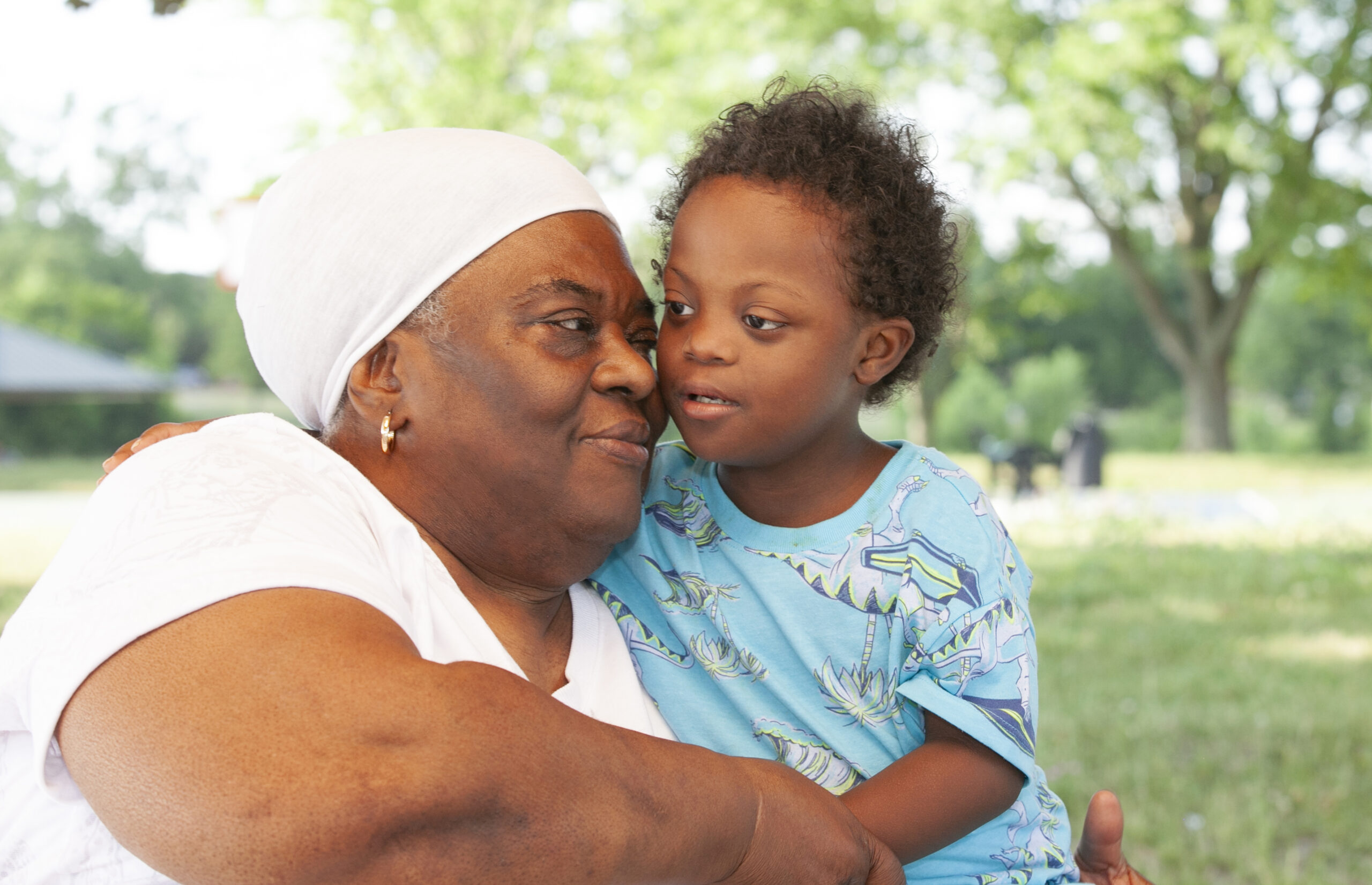
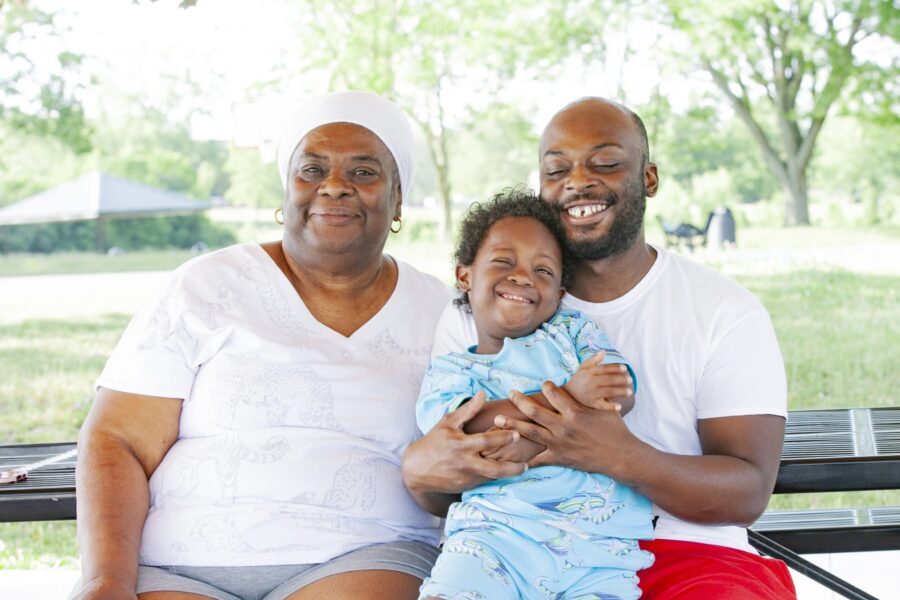
After raising two biological children, adopting two foster children, and pitching in to help parent two nieces and a nephew after her sister succumbed to breast cancer, single mom Cindy Cash had been caring for children for nearly half a century. By her early sixties, she had shepherded seven children to adulthood. But her biggest challenge was yet to come.
In 2019, Cindy’s grandson, Jaicion, was born with Trisomy 21, a form of Down syndrome, along with a host of related medical issues, including a heart condition, gastrointestinal abnormalities, and an increased susceptibility to respiratory infections. Jaicion’s family dynamics were as complex and fragile as his health status. Cindy’s son, Aaron (the baby’s father), and the birth mother were no longer together. Aaron pleaded with her to let him spend time with his son, and Cindy offered to help with her grandson’s care. But, during the pandemic, all communication from Jaicion’s mom ceased. Cindy and Aaron waited and worried. Meanwhile, Jaicion was missing medical appointments and falling short of developmental milestones. By the time he was seen by a pediatrician for a lingering lung infection, the malnourished, medically vulnerable toddler was so sick that he went into respiratory arrest in the practice’s exam room. Resuscitated by EMTs, he was hospitalized for 52 days. During that time, the Illinois Department of Children and Family Services (DCFS) assumed temporary guardianship and began the search for a foster home. “As soon as we found out that Jaicion had been hospitalized, we rushed over, but we weren’t allowed to see him because we weren’t on the hospital’s list
of family members,” says Cindy today. “So Aaron and I went to the hospital and stood there until we got some answers. That’s when we found out Jaicion was in DCFS custody.”
Cindy sought out the social worker handling Jaicion’s case, mentioned her previous experience as a Hephzibah foster parent, and offered to provide full-time kinship care for her grandson upon his release from the hospital. “I wouldn’t rest if he went to live with strangers,” she confides, “so I volunteered to care for him in my home, with Aaron’s help. I knew that, together, we could do whatever it took to help Jaicion heal and achieve his full potential.” As soon as DCFS cleared Cindy as a kinship caregiver, she made a request to transfer Jaicion’s case to Hephzibah. “I had a very good experience with Hephzibah when I fostered and then adopted Malcolm and Martin, two brothers who were just babies when they came into care in 1997,” she recalls. “Hephzibah was there for us whenever we needed anything.”
“I have always loved children. As a traditional foster parent in my thirties and as a kinship caregiver in my sixties, I wanted to share that love to help children thrive through rough patches in their lives.” – Cindy 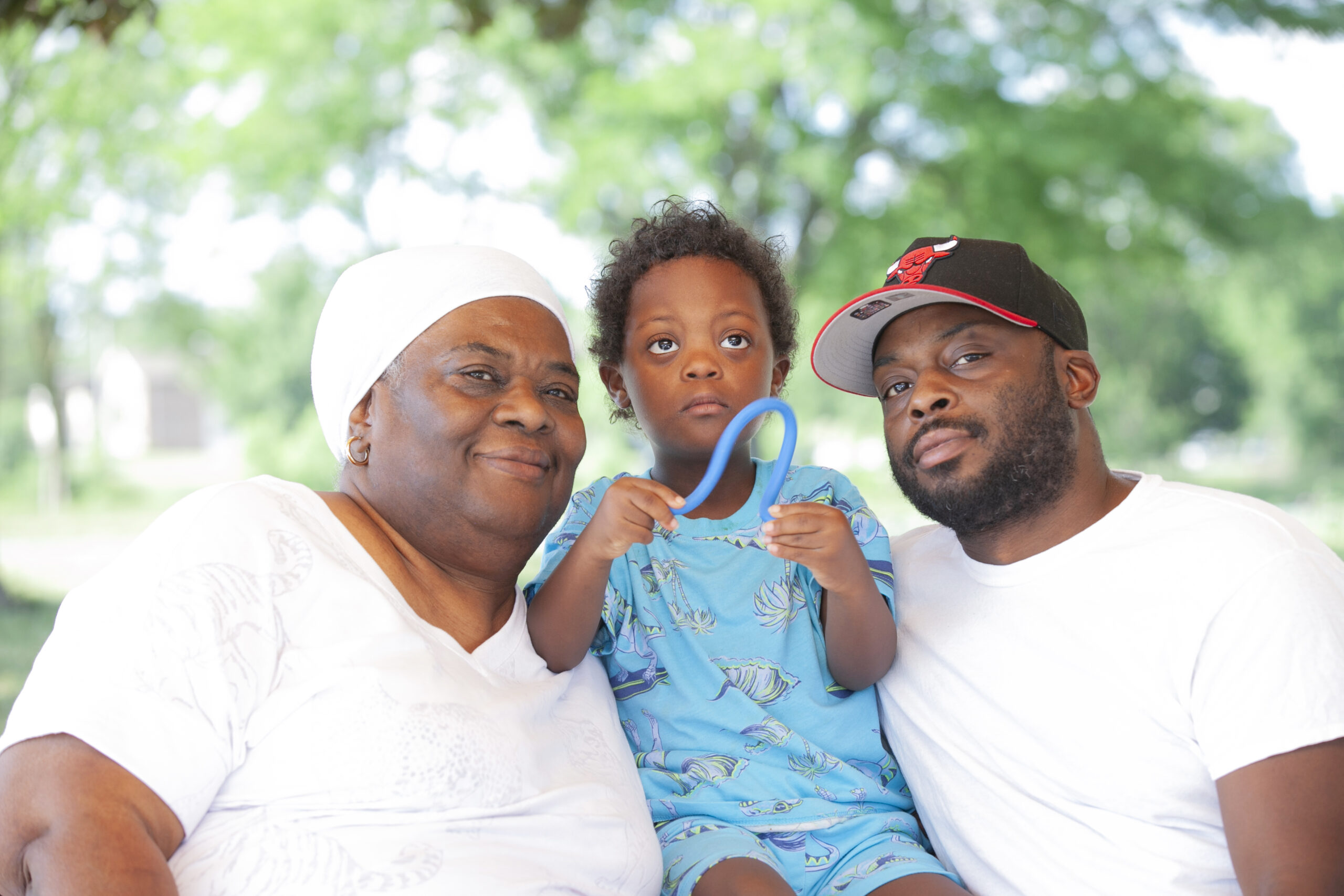
Studies show that kinship care—which involves placing children with family members or close family friends—generally leads to greater placement stability and better outcomes because it preserves children’s connections to their families, cultures, and communities and gives them a stronger sense of identity and belonging. Although Cindy wasn’t aware of the research documenting the powerful benefits of kinship care, she knew instinctively that it was the right choice for her family and that Hephzibah, with its specialized foster care program for children with disabilities or medical conditions, was the agency that could best meet her grandson’s complex needs.
“At 15 pounds, Jaicion was seriously underweight for a two-year-old when I took him home from the hospital; he couldn’t walk or move around much, and he still had a lot of physical healing to do,” she points out. “It was a lot to take on, especially at my age. But Hephzibah made sure we had everything we needed to care for Jaicion, from medical equipment and supplies to a visiting nurse.” “Through our specialized foster care program, we arranged for a registered nurse to visit Jaicion at home and monitor his health status on a monthly basis,” explains Julie Dvorsky, Hephzibah Director of Family Based Services. Since those early days, Jaicion has gained so much weight that Cindy can’t pick him up anymore—and she can’t remember the last time he was sick. “Last year, Jaicion saw some other children running around, and he got up out of his special-needs stroller and started walking!” she reports. “Now he’s always on the move. Developmentally, he is doing so much more than we ever thought possible. He loves being picked up and tossed in the air by his dad, and he laughs uncontrollably when they play together. This child is our life now. Keeping our family together and caring for Jaicion has meant everything to me.”